HANSA SETHI
What the Mind Bleeds
What the Mind Bleeds
Couldn't load pickup availability
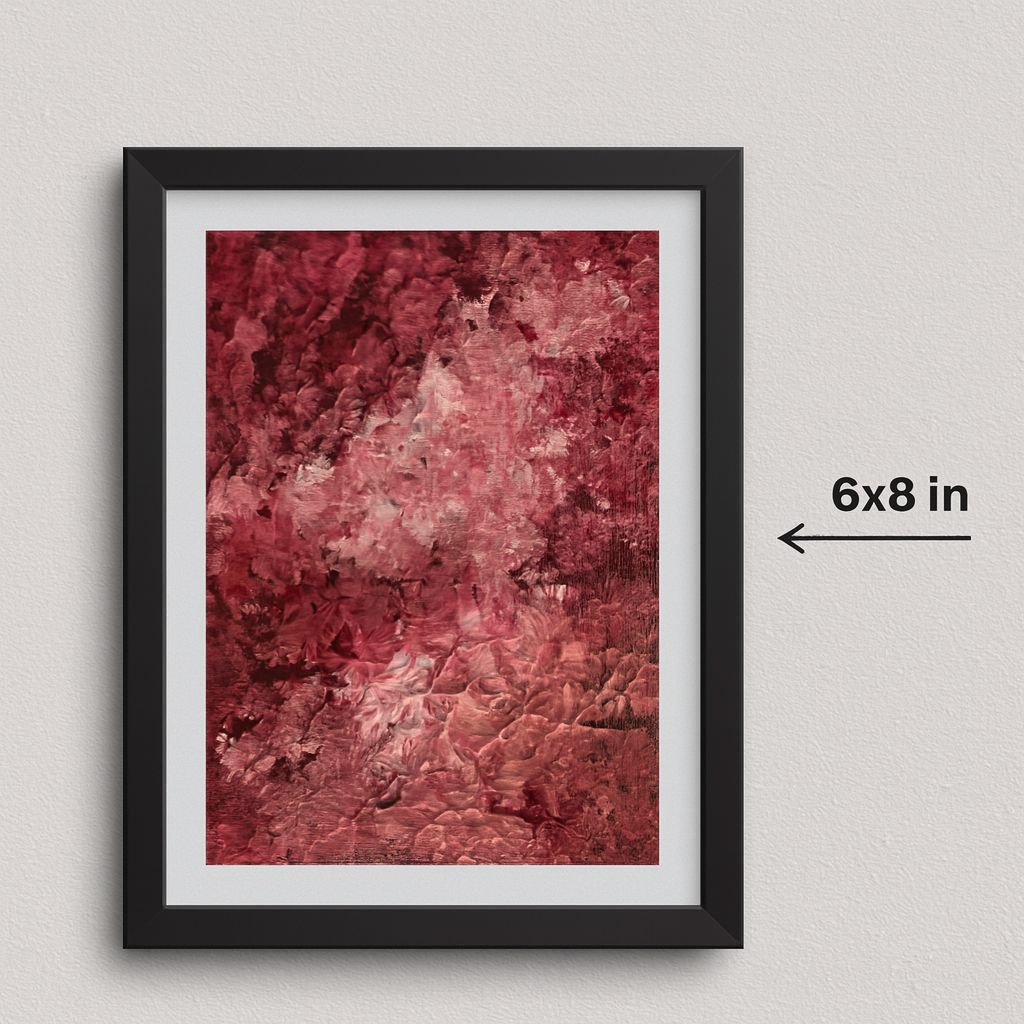
What the Mind Bleeds is an unfiltered descent into the interior — the kind of emotional terrain that exists somewhere between memory and wound. The painting feels both tender and raw, like thought material made visible. It isn’t loud, but it’s not peaceful either. The surface pulses with contained unrest, as if something beneath it has been struggling to surface for too long.
Rendered in varying shades of crimson, rose, and muted maroon, the piece evokes the duality of flesh and feeling — the mind as both vessel and battlefield. The colors appear to blur and clot, suggesting that emotions don’t resolve neatly; they coagulate, stain, and persist. The strokes themselves are thick and almost visceral, each one carrying the texture of instinct more than intention. It’s painting as catharsis — not an act of depiction, but of release.
The movement within the work is circular and suffocating, pulling the viewer into its density. Some areas appear almost floral, while others dissolve into abstraction — a reminder that beauty and pain often share the same visual language. The lighter patches feel like moments of lucidity, brief flashes of self-awareness in the midst of psychological noise. Yet even those are fleeting; they dissolve back into the reddish haze, as if thought itself is bleeding back into emotion.
The title, What the Mind Bleeds, captures that essential truth — that the mind doesn’t break cleanly. It seeps. It leaks memories, guilt, desire, fragments of identity — things we believe are contained but aren’t. This painting seems to ask: what happens when introspection turns physical? When thought and feeling lose their boundaries?
There’s a haunting calm to the chaos here. The tones of red don’t scream; they hum — like blood flowing under the skin, constant and inevitable. That quiet intensity gives the work its emotional gravity. It doesn’t dramatize pain; it acknowledges it.
Ultimately, What the Mind Bleeds stands as an abstract portrait of consciousness under strain. It’s about the things we try to suppress and the strange beauty that emerges when they find their way out anyway. Beneath its layered surfaces lies a kind of reconciliation — not between pain and peace, but between knowing and feeling. It’s the mind confessing what language never could.