HANSA SETHI
Inside the Disguise
Inside the Disguise
Couldn't load pickup availability
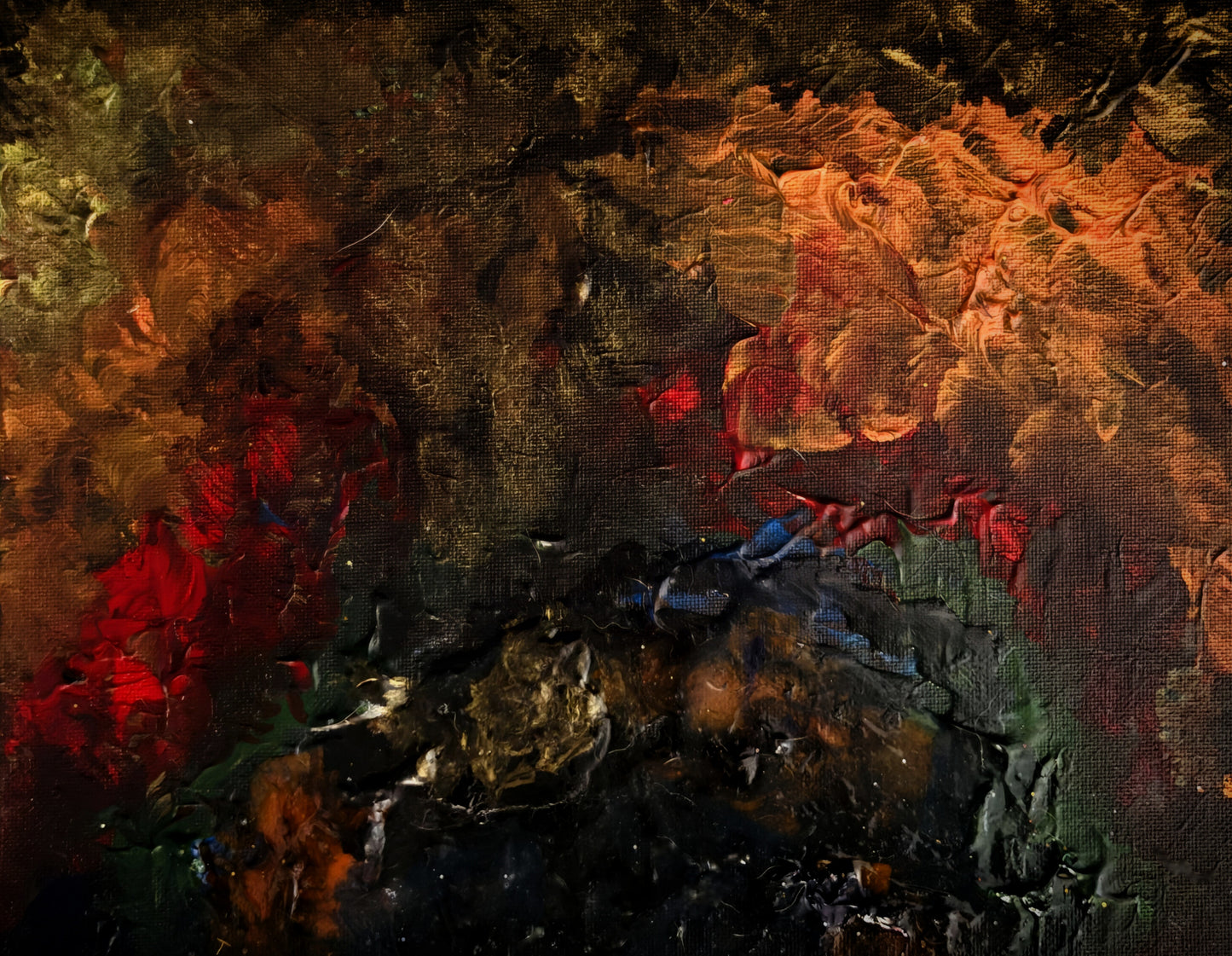
Inside the Disguise peers into the uneasy territory between concealment and truth — the place where what we show and what we suppress begin to blur. The painting feels heavy with secrets, not loud or chaotic, but thick with the weight of what’s been buried too long. It doesn’t depict a mask; it feels like being trapped inside one — seeing the world through layers that no longer belong to you.
The upper region of the work, dominated by dense, black textures, resembles a hardened surface — molten, reflective, almost suffocating. This darkness doesn’t merely cover; it contains. You can sense something alive underneath it, something pushing against its boundaries. The black isn’t empty; it’s crowded — with thoughts, with pressure, with everything that refuses to be seen. Beneath it, hues of deep crimson, burnt umber, and muted green flicker through — like glimpses of raw emotion seeping through cracks in the disguise.
The lower part of the composition, in contrast, carries warmth and tension. The earthy browns and golds swirl into each other, evoking flesh, soil, and decay — elements of truth stripped of glamour. These areas feel more vulnerable, less controlled, as if the mask is thinning, beginning to dissolve. There’s movement here, a quiet rebellion against the black mass above, suggesting that authenticity always finds a way to leak through even the thickest armor.
What makes Inside the Disguise powerful is its restraint. It doesn’t scream for revelation; it allows the viewer to sense the hidden pulse beneath the surface. It reflects the paradox of self-presentation — how we craft identities to protect ourselves, only to end up imprisoned by them. The painting visualizes that fragile moment when the disguise begins to fracture, when pretense can no longer contain what’s real.
The use of color becomes psychological language. Black is suppression, red is emotion under pressure, brown is the grounded truth of being — flawed, exposed, but human. Together, they form a quiet dialogue about survival through concealment.
In essence, Inside the Disguise is a study of what it costs to appear composed. It captures the slow erosion of control — when the weight of the hidden self starts to press through the surface. It’s not about the drama of exposure, but the quiet ache of endurance: the realization that even the most convincing disguise can’t outlast what’s true beneath it.